
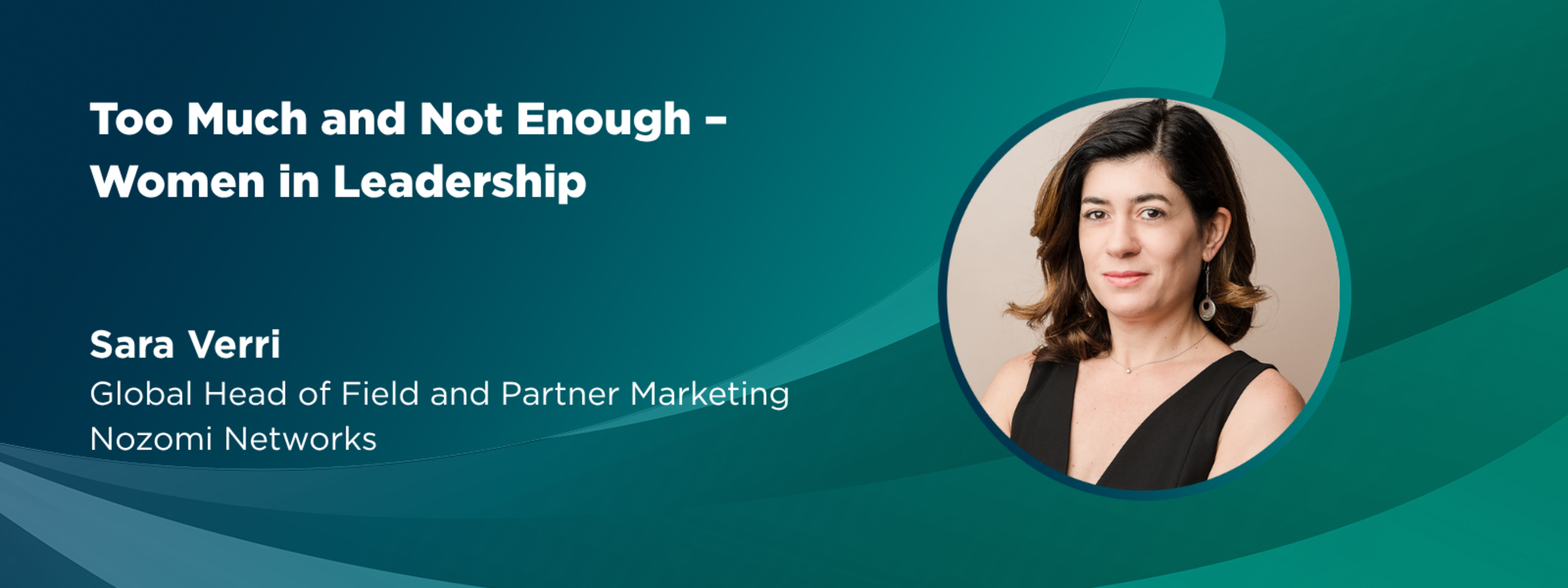
Too Much and Not Enough – Women in Leadership
By Sara Verri, Global Head of Field and Partner Marketing, Nozomi Networks
What if the things you were told to tone down are the very things that make you a great leader?
Have you ever been told you’re “too much”?
Too direct. Too emotional. Too ambitious. Too intense. Or maybe… not enough.
Not friendly enough. Not flexible enough. Not soft enough.
If so, you’re not alone.
A few years ago, someone I had just started working with said something unexpected, “You have a wall. Why don’t you let others know you? You always look so serious. But you’re fun — and smart.”
That comment stayed with me. That colleague is now one of my best friends — and thanks to him, I’ve made many more. That moment changed how I show up.
I started laughing more at work, I stopped editing myself, and I realized: I had been hiding the very things that made me, me — because I thought they made me “too much.”
And “too much” was only for friends. Not for work.
Where Did That Start?
If you’ve ever had to shrink to fit, you know how early it begins.
I didn’t grow up in a space that encouraged bold girls.
Confidence was criticized. Speaking up was called disrespectful. Being curious? “Too much.”
So, I learned to read the room. To stay calm when things got loud. I became attuned to moods. Careful with tone. Skilled at managing egos.
Sound familiar?
In environments built on ego — or let’s name it, misogyny — those same strengths often get misread:
- “Too assertive” when you’re just being clear
- “Too ambitious” when you’re capable
- “Too emotional” when you care
Let me ask you this:
How many times have you seen your ambition mistaken for aggression?
Your calm mistaken for coldness?
Your boundaries mistaken for defiance?
The Labels Don’t Define You
I worked hard. Earned trust. But I didn’t always speak up. I second-guessed myself earlier in my career. I watched others rise faster — with less effort, or simply more confidence.
Then I understood. Maybe, like me, you turned those survival skills into leadership tools: Grit. Empathy. Awareness. Focus. Tenacity. Accountability.
Leadership might not be about you — but it starts with how you show up.
The Double Standard Is Real
Women in leadership often do two jobs:
- The actual job
- And managing how others feel about us doing it
We’re told:
- Be strong — but not too strong
- Be direct — but not too blunt
- Be ambitious — but not intimidating
We lead. We deliver. We support.
But the moment we speak up, we risk being called “too much.”
So, here’s a better question - What if “too much” is exactly the right amount?
Lifting vs. Competing
I’ve had incredible mentors — especially men who welcomed strong women and gave them space to grow.
And I’ve had tough moments — with men and with women who saw competition instead of connection. Who tore down instead of lifting up.
That still hurts. And maybe you’ve felt it too.
But it made one thing crystal clear:
I want to be the kind of person who builds.
- The one who lifts people up
- Who makes space, not takes it
- Who doesn’t have to be the loudest to be heard
What kind of leader do you want to be?
Leadership isn’t about titles. It’s about trust — and impact.
It looks like:
- Giving credit freely
- Creating space for others to thrive
- Leading with honesty and heart
- Knowing when to speak — and when to listen
You don’t have to control everything to be in charge.
You don’t have to be the smartest in the room to help the room rise.
The mark of a great leader is when people look at you and think, “That’s who I’d like to grow into.”
Not someone they’re trying to work around.
Not someone they never want to become.
Leadership means being trusted — not just followed.
It means:
- Being a sounding board when your team needs clarity
- Being hands-on when it matters — and invisible when it doesn’t
- Empowering people so naturally they step into their own decisions without even realizing you helped build the space
The goal isn’t to protect your power.
It’s to share it. It’s to protect people.
To build a culture where others don’t just survive — they thrive.
Because strength doesn’t have to be loud.
And softness doesn’t mean weakness.
We can be both — a little wild and still grounded.
Une fleur rebelle.
That’s leadership.
Whether it’s recognized or not.
What’s one part of yourself you were once told to hide — that’s now your greatest strength as a leader?