
Wake-Up Call of a 3x Founder - How Leaders Can Beat Burnout with Workflow Management and AI
by Alane Boyd, Co-CEO, Biggest Goal
We don’t talk enough about what leadership really costs.
Leaders are expected to carry it all. Vision, product, people… and somehow still sleep at night. I tried to be the kind of leader that “could do it all”, until my body gave me a wake-up call.
When people think of business leaders, the image they often imagine is one of grit and tenacity. We're supposed to have it all together. We're expected to be the steady hand, the unshakable leader, the one who carries the weight.
But here’s the truth I wish more people talked about: being in the leadership of a company can take a serious toll on your mental and physical health.
There were years (seven to be exact) when I couldn’t even talk about this. I carried so much shame with me. The fact that I couldn’t do it all felt like a personal failure to me. But, I noticed something when I started talking about it more openly… others were struggling too, and what I shared resonated with them. It is like working out, you get in the reps and things become easier. This is me working on my reps of sharing the chronic stress I endured for years, how I overcame it, and how I manage my team now so that we don’t suffer silently.
Here is the short version of what happened. One morning, I woke up and couldn’t open my eyes. My face was so swollen, my eyes were closed shut. My body felt like fire ants were eating me from the inside out. My hands were weeping, and I looked like a burn victim. I was in severe pain. It took months of these types of episodes happening before I started seeking help, and Googling wasn’t giving any answers. Eventually, a doctor diagnosed me with angioedema, a chronic, stress-induced autoimmune disease.
I wasn’t just burned out. I was broken. Turns out, “pushing through” wasn’t strength, it was destruction.
I kept questioning how I got to that point. I realized after selling my company and staying on with the buyer, that the systems, automation, and company culture I had created for our team had been torn apart. These “cold” systems created a “warm” culture for us to thrive in. When it was removed and thrown into a new company that didn’t value them, it turned into stress-ridden chaos.
It wasn’t just me who was suffering. The symptoms appeared in other ways within the teams, most notably through high turnover. It was the terrible systems, manual processes, mental clutter, and the tangled web of overlapping responsibilities that left no one truly accountable.
The scariest day for me was when I walked away from my company. The company I spent a decade building. Once again, I remember shame creeping up because my team members might think of me as a failure.
This is why I do what I do now: rethinking systems, especially through the use of AI and automation, became a turning point not just for my health, but for the way I lead and support my team now.
I see what AI and automation can do to help alleviate the mental load we carry so we can get on with our day to do the things we enjoy outside of work.
And here’s the part I think you’ll appreciate most: I’ll also point you toward some free tools and resources you can start using today to help reduce stress and create healthier systems for yourself and your team.
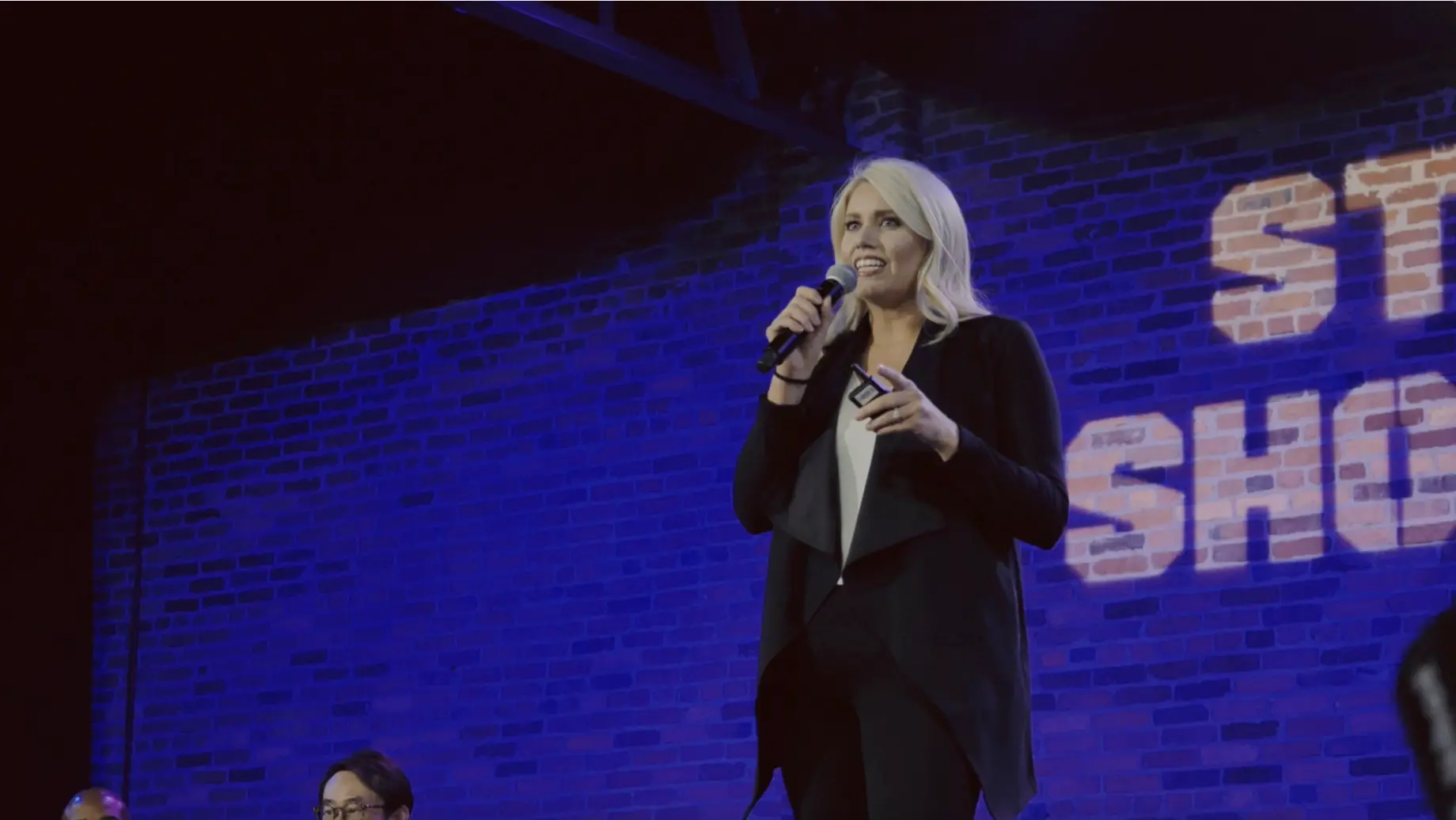
Biggest Goal Co-CEO Alane Boyd speaks across the U.S., sharing how she overcame a stress-induced autoimmune disease by rethinking workflows and integrating AI-driven stress management strategies.
AI, AI Agents, and Automation Change Everything
After exiting two SaaS companies and launching my next venture, I made a decision: I’m going to help companies build the systems I originally created to make workdays easier.
Using AI, AI Agents, and automation is not just for efficiency but to protect our health, to protect our brain, to protect the people we lead by:
- Decreasing cognitive load. Moving data between systems is mind-numbing.
- Gaining space to think. Automating repetitive work gives energy for the big stuff.
-
Removing managed chaos. Clear workflows mean fewer “do you have a minute?” fires and more focused progress.
My goal for ourselves and everyone we work with: make it so that people can leave work so that they aren’t replying to emails at 9pm or finishing a report at 1am. We all want the same thing: to have a life we love. And, although we can enjoy the work we do, there are things we love doing that aren’t work.
I also want to be very clear: when I talk about using AI, I don’t mean using ChatGPT more. The real value of AI is in automated systems, like AI Agents. Agents are now more like a human on your team that knows exactly how to do their specific job, and are waiting 24/7 for the trigger to get started.
If you want to learn more about the difference between prompting AI and AI Agents, check out this WOTC article by Alane Boyd.
AI Isn’t Therapy
Tech can’t replace boundaries, rest, or real support, but it can clear the clutter so you can show up better for your team, your family, and yourself.
Burnout isn’t a badge of honor. It’s a signal that your systems are failing you.
In many cultures, admitting exhaustion is mistaken for weakness. Stress behaviors, like irritability, withdrawal, or being overly critical, are often mislabeled as poor leadership or challenging behavior, when in fact they are symptoms of burnout (especially for women who are also carrying a majority of the load at home).
Unchecked, these patterns don’t just harm leadership; they influence how teams show up, collaborate, and thrive. When teams learn how to use AI and automation to simplify work, they experience less stress, fewer bottlenecks, and greater capacity for innovation. Think of AI and automation as a way to clear the mental clutter so you and your team can focus on the human side of leadership, connection, creativity, and compassion.
If you’re curious about where to start, my company, Biggest Goal, offers free tools and resources to help you try practical automations without overwhelm.
P.S. There is no substitute for sleep. My day starts with eight hours of sleep the night before. If our bodies didn’t need rest, we would have evolved out of needing sleep.
Final Thoughts
If you’re a leader, executive, or manager feeling the weight of your responsibilities crushing you a little more each day, you’re not weak, and you’re not alone. Burnout is not a personal failure; it’s often the result of broken systems and unsustainable expectations.
The strongest thing you can do is not carry it all; it’s creating systems that support you, using technology that lightens the load, and offering ideas with solutions to make progress forward.
For me, going from crisis to clarity wasn’t easy. It took a swollen face, cracked, bleeding hands, and years of healing. I am grateful that I got this wakeup call in my 30s, instead of something more serious in my 50s. Leaning into healthier practices and AI-supported systems gave me the space to heal and the clarity to lead with compassion.
Let’s talk more openly about the cost of leadership, and how to build systems, both human and AI-powered, that sustain us, not drain us.