
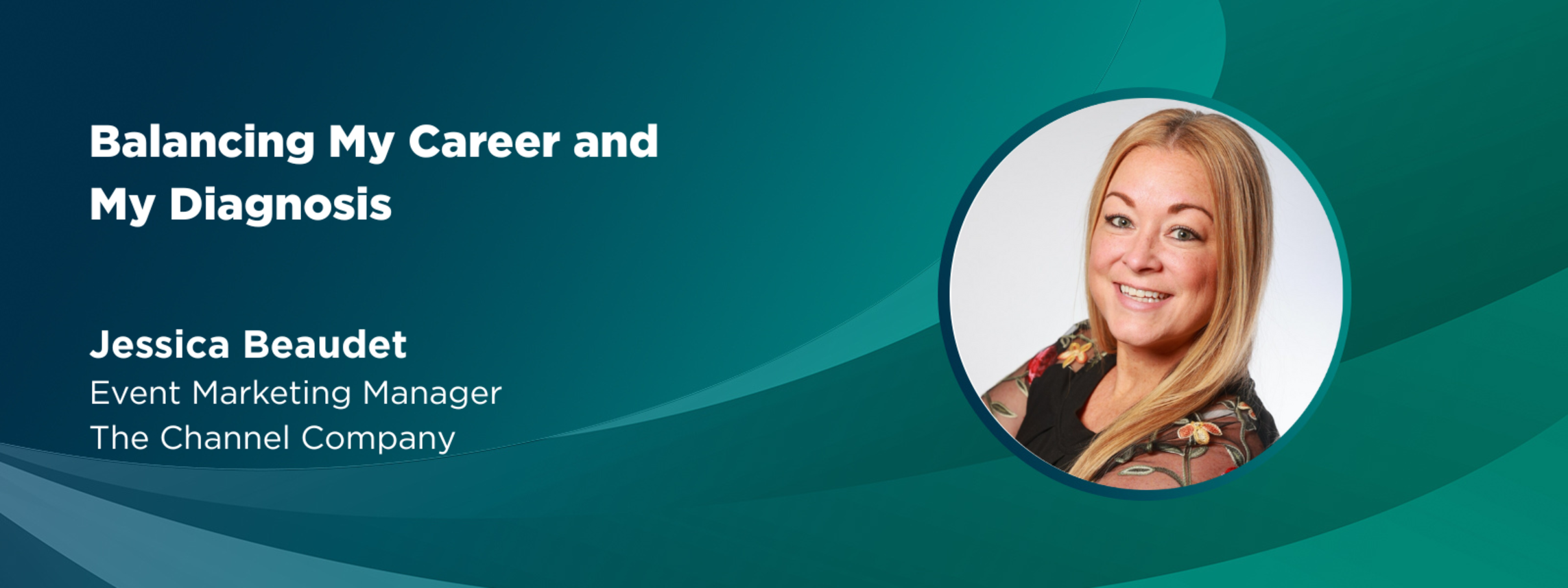
Balancing My Career and My Diagnosis
By Jessica Beaudet, Event Marketing Manager, The Channel Company
When Work Meets a Life Changing Diagnosis
In June 2020, I heard words I never expected: You have Ocular Melanoma.
A rare diagnosis. A terrifying one. And one that didn’t care that I was working fulltime, deep into deadlines, or trying to be everything for everyone.
What surprised me most wasn’t just the emotional weight of that moment, but how deeply it reshaped how I view work, time, and what “taking care of yourself” actually means.
Working Through a Serious Diagnosis Isn’t a Straight Line
When you’re navigating something life altering, you quickly realize that your body and mind don’t operate on a 40hour schedule.
Some days you’re strong and focused.
Other days, you’re tired, anxious, or processing news you didn’t ask for.
But here’s the thing: we still show up. Because that’s what we do.
We show up for our teams, our projects, and our people, often while silently juggling appointments, test results, or the mental gymnastics of “acting normal” when nothing feels normal.
The Power of a Workplace That Actually Sees You
I was already an employee at The Channel Company when I was diagnosed, and I can tell you firsthand: support matters.
It matters to work for a company that values wellness—not as a buzzword—but as a lived priority. From the wellness and fitness initiatives to encouragement around healthy habits, mental health, and employee wellbeing, that culture shows up in meaningful ways.
It matters when leadership reminds you it’s okay to take time—real time—even if it’s just to breathe.
And it matters even more when you’re dealing with something you can’t just push through with caffeine and determination.
Health Isn’t a Luxury—It’s a Requirement
We live in a world that applauds the hustle.
We reward the late nights, the stacked calendars, the inbox marathons.
But a diagnosis forces you to ask: At what cost?
To keep working and living fully, I had to learn a new kind of discipline—the discipline of making myself a priority.
Blocking time for appointments.
Resting without guilt.
Saying no, even when it feels uncomfortable.
And recognizing that health isn’t something you “fit in”—it’s something everything else must fit around.
How to Make Space for Health While Working 40+ Hours a Week
Here’s what I’ve learned:
-
Plan your week around your body, not just your meetings. If you know posttreatment days are tough, protect them.
-
Give yourself permission to pause. A five-minute breather can keep a hard moment from becoming an overwhelming one.
-
Tell someone you trust. You don’t need to share everything but having one colleague who “gets it” makes all the difference.
-
Use the resources available. Wellness initiatives exist for a reason—take them.
-
Be gentle with your productivity. Progress counts, even when it’s slower.
You Can Be Strong and Still Need Space
Dealing with a serious health issue doesn’t make you weak.
If anything, it makes you stronger in ways people don’t see.
It teaches you to advocate for yourself.
It teaches you to work smarter, not harder.
It teaches you that life is too precious to ignore your body when it whispers—because one day, it may scream.
Why I’m Sharing This
I’m sharing my story not because I want sympathy, but because I know I’m not the only one working through something heavy.
Health challenges—physical or mental—are part of being human.
And the more we talk about them, the more we normalize the idea that you can be a high performing professional and a person who needs care.
If you’re navigating something similar, I hope this reminds you:
You are allowed to take up space. You are allowed to rest. You are allowed to put yourself first.
Your work matters.
But you matter more.
Bio: Jessica Beaudet is an Event Marketing Manager at The Channel Company and a proud “boomerang” teammate. She first joined in 2019 as a Customer Success Manager, returned in 2024 to focus on audience and event marketing, and has spent more than a decade shaping creative, results driven programs. Known for coordinating chaos with a smile, Jessica connects the dots between content, community, and conversion, turning launch timelines into experiences that actually move people. Her north star for 2026 is balance: doing excellent work while making space for health, family, and the humans behind the metrics.