
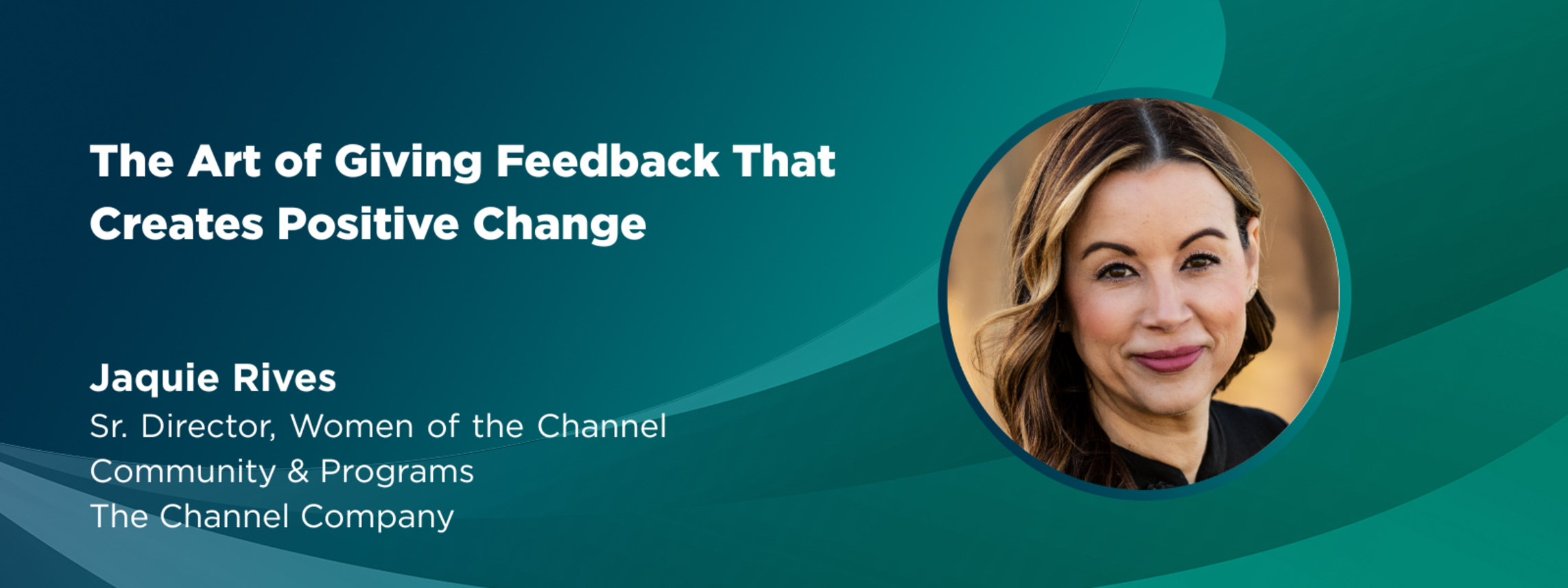
The Art of Giving Feedback That Creates Positive Change
By Jaquie Rives, Senior Director, Women of the Channel Community & Programs, The Channel Company
The Power of Constructive Feedback: Building Better Conversations, Teams, and Experiences
At WOTC West in May, I was reminded once again of the extraordinary power of community. The energy in the room, the generosity of the speakers, the engagement from attendees, and the dedication of the team behind the scenes created something truly special. Events like these don’t happen by accident — they are built through collaboration, care, and an ongoing commitment to improvement.
One of the most important parts of that process happens after the event ends: reviewing feedback.
At WOTC, feedback matters deeply to us. It helps us refine the experience, strengthen the value we deliver to attendees and sponsors, and ensures we continue creating meaningful opportunities for connection and growth.
As I worked through this year’s responses, something stood out to me — not just the insights themselves, but the way they were delivered.
It sparked an important reflection on a skill that impacts every workplace, every team, and every leadership journey: the ability to give constructive feedback.
Feedback Is Essential — But How We Deliver It Matters
Constructive feedback is one of the most valuable tools we have for growth. It helps individuals improve, organizations evolve, and ideas become stronger. Without honest feedback, progress stalls – but - there is an important distinction between feedback that is constructive and feedback that is simply critical.
Constructive feedback:
-
Identifies a specific issue or opportunity
-
Offers context or examples
-
Is delivered respectfully
-
Focuses on improvement rather than blame
-
Leaves the recipient feeling informed rather than diminished
Non-constructive feedback often:
-
Feels personal rather than professional
-
Uses harsh or dismissive language
-
Provides criticism without clarity
-
Focuses only on negatives
-
Creates defensiveness instead of dialogue
The difference may seem subtle, but the impact is significant.
Leadership Requires Emotional Intelligence
One of the greatest leadership skills we can develop is learning how to communicate honestly while still leading with empathy.
Strong leaders know that feedback is not about venting frustration — it is about creating positive change.
Before offering feedback, it can help to ask:
-
Is my intention to help improve the outcome?
-
Am I being specific and solution-oriented?
-
Would I say this the same way in a face-to-face conversation?
-
Does my feedback build trust or erode it?
These questions apply everywhere — in leadership, business partnerships, team collaboration, and even everyday relationships.
The Most Valuable Feedback We Received
Ironically, some of the most impactful feedback from WOTC West came from attendees who shared thoughtful observations with kindness and clarity.
Comments like:
-
“I would have loved more networking time between sessions.”
-
“A breakout session focused on emerging leaders would be valuable next year.”
-
“The panels were fantastic — perhaps adding more audience Q&A could make them even more interactive.”
This type of feedback is incredibly powerful because it acknowledges the effort while also contributing ideas for improvement. It creates momentum rather than discouragement.
And importantly, it increases the likelihood that feedback will actually be heard and acted upon.
Creating Cultures Where Feedback Works
Organizations thrive when people feel safe to contribute ideas, perspectives, and concerns constructively.
The best cultures are not built on avoiding feedback — they are built on learning how to exchange it effectively.
That means:
-
Encouraging honesty with respect
-
Assuming positive intent
-
Balancing critique with recognition
-
Focusing on shared goals
-
Remembering there are humans behind every effort
Behind every event, initiative, business, or project are people who care deeply about the outcome. A little humanity in how we communicate goes a long way.
A Reminder We Can All Carry Forward
Feedback will always be part of growth. In fact, it should be. The willingness to listen, adapt, and improve is what elevates good organizations into great ones.
But perhaps the real opportunity for all of us — especially as leaders — is to ensure our words contribute to progress, not just opinion.
Because constructive feedback does more than improve experiences.
-
It strengthens teams.
-
It builds trust.
-
It inspires better outcomes.
And when delivered thoughtfully, it helps people feel empowered rather than diminished.
That is the kind of leadership our workplaces, communities, and conversations need more of.
Bio: Jacquie Rives is Senior Director of Women of the Channel (WOTC) Community and Programs at The Channel Company, where she leads the global vision, strategy, and execution of WOTC’s programs and community initiatives. She is responsible for driving growth, engagement, and impact across a portfolio that includes international leadership summits, strategic partnerships, and content designed to elevate and connect women across the technology channel.
Prior to joining The Channel Company, Rives served as Chief Operations Officer at a managed solutions provider, overseeing project and service teams and leading operational strategy. Her career foundation includes expertise in project management, entrepreneurship, and team leadership, complemented by six years of service in the U.S. Army in both the United States and abroad.
A champion for community and leadership development, Rives is dedicated to creating opportunities that support and accelerate women’s careers. Outside of work, she enjoys traveling, photography, hiking, and skiing. She lives in Georgia with her husband and their rescue pup, Lucy, and is the proud mother of two daughters.